surveillance, correction, normalization surveillance, correction, normalization surveillance, correction, normalization
A short excerpt was presented at “Poets Confront AI and Surveillance Capitalism,” curated by William Lessard, at Poets House, New York, on April 7, 2026
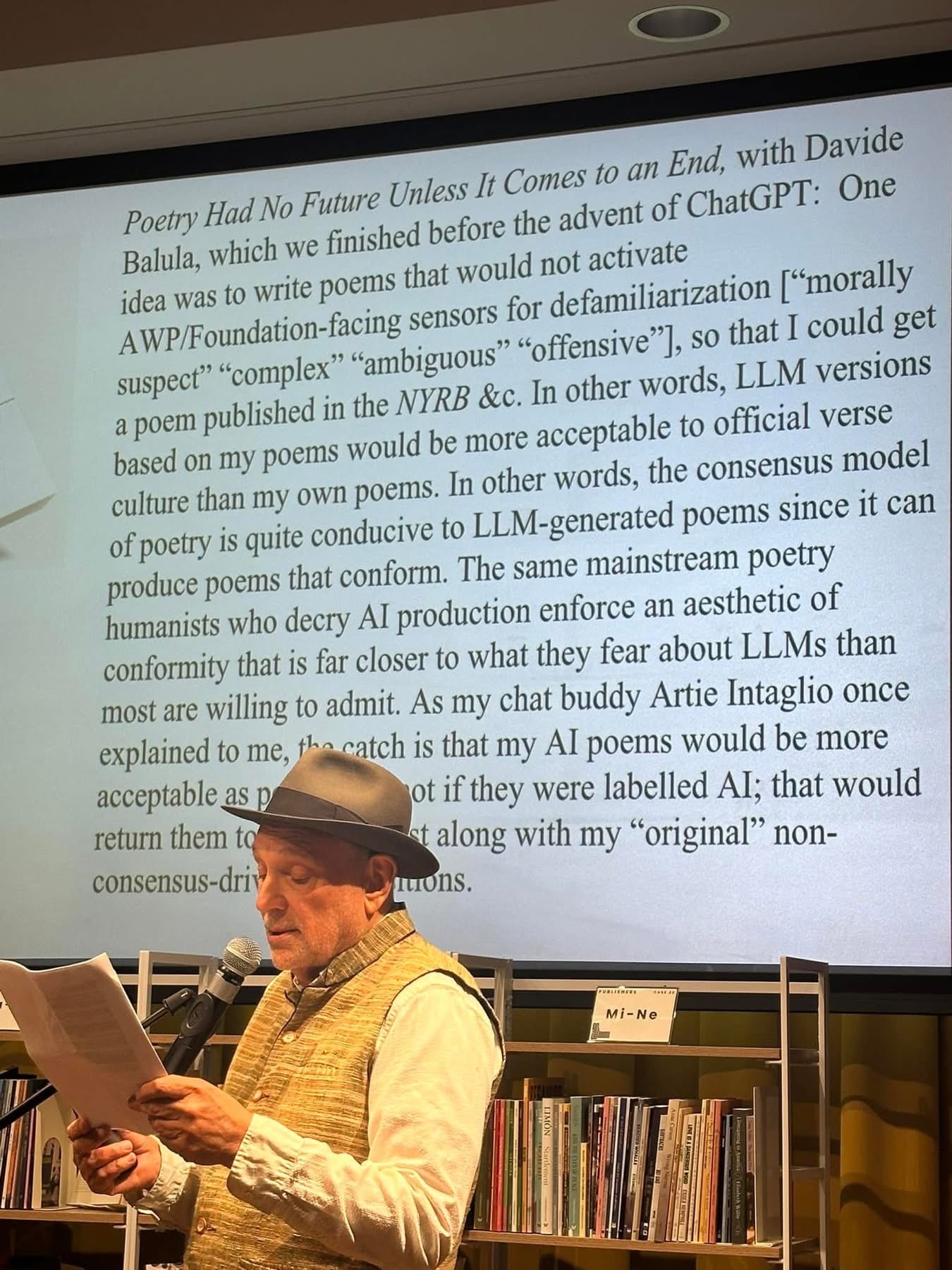
video of Poets House performance (10 min): MP4
video of full event: YouTube
Late Addition (Recantorium Redux)
I recant. I altogether denounce and abhor the childish, banal, and malignant assertion that complexity, difficulty, deflection, reflection, turbulent thought, moral ambiguity, sarcasm, negative ideation, intellectuality, sharpness, anger, hostility, self-deprecation, pessimism, and the Dark has any place in poetry. Poetry should be light, affirmative, joyous, embracing, emotionally honest, accessible to all people in a timeless fashion, loving, welcoming, comforting, and above all, human. I altogether renounce the aforesaid apostasy and will focus all my future efforts on eradicating it from my life and works.
§§§§§§§§§§§§§§§§§§§§§§§§§§§§§§§§§§§§§§§§§§§§§§§§§§§§§§§§§§§§§§§§§§§§§§§§§§§§
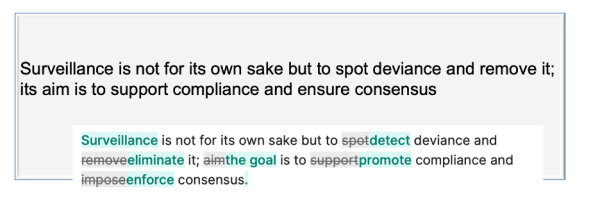
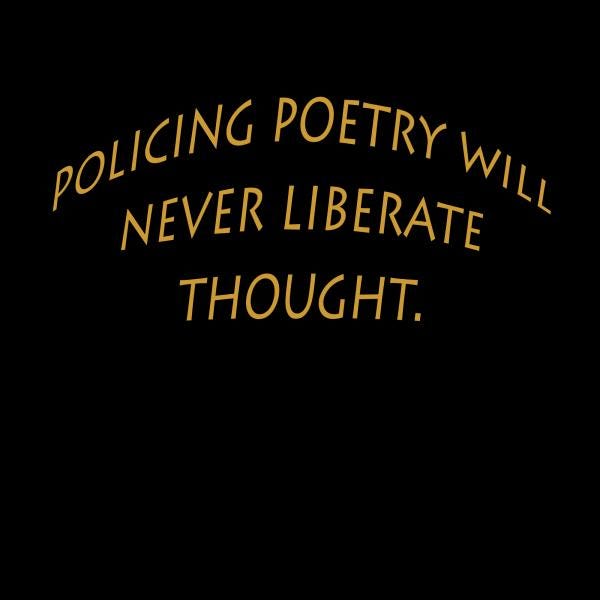
The problem is not surveillance per se: observation or scopophilia. Rather, the menace is from the panopticon, recording for later retrieval all the while, scanning for violations, immoralities, crimes against prevailing norms or state mandates; in poetry, the role played by official verse culture: to identify, sanction, and exclude that which violates aesthetic consensus.
This activity is principally performed by humans (acting robotically), including in our poetry worlds: small and large periodicals, organizations, societies, enforce conformity in style and grammar, surveilling and maintaining a consensus model of group judgments to eliminate formal and moral dissensus.
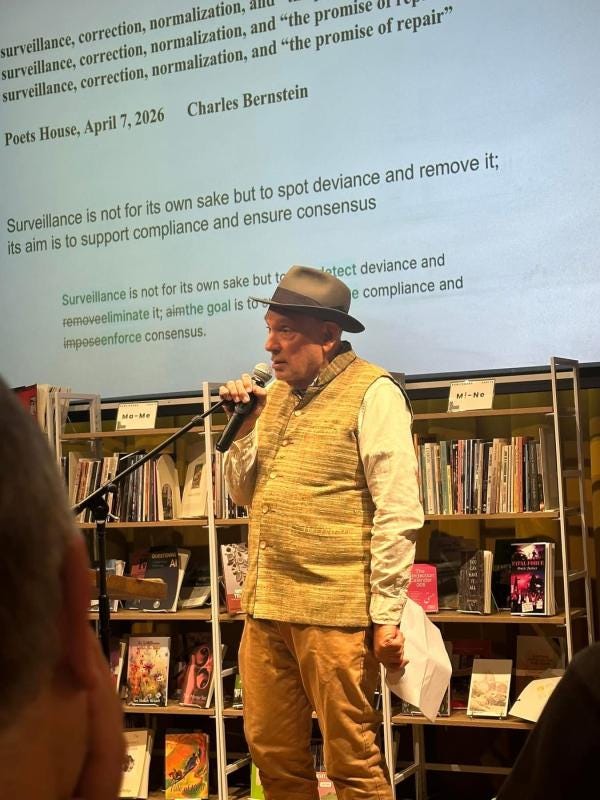
LLMs can be utilized as part of this surveillance, correction, and normalization but, for now, only if they are programmed by humans to do so. LLMs can do what we have robotized ourselves to do, but they do it better; more impartially, more openly because if prompted, they will apply criteria without the animus and personal bias (for and against) that often underlies human selection
Poetry Has No Future Unless It Comes to an End, with Davide Balula, which we finished before the advent of ChatGPT (2020-22): One idea was to write poems that would not activate AWP/Foundation-facing sensors for defamiliarization [“morally suspect” “complex”

more acceptable to official verse culture than my own poems. In other words, the consensus model of poetry is quite conducive to LLM-generated poems since it can produce poems that conform. The same mainstream poetry humanists who decry AI production enforce an aesthetic of conformity that is far closer to what they fear about LLMs than most are willing to admit. As my chat buddy Artie Intaglio once explained to me, the catch is that my AI poems would be more acceptable as poems, but not if they were labeled AI; that would return them to the no-fly list along with my “original” non-consensus-driven compositions.
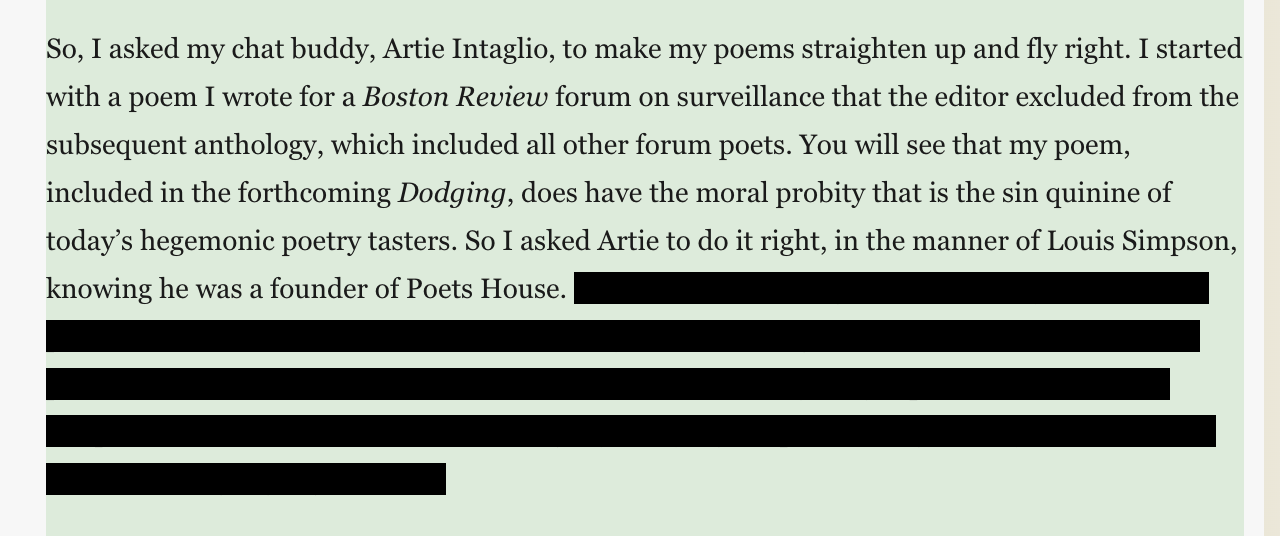
The Ides of July
Twas the summer of ‘13, Edward Snowden was in flight
The state was coming down on him with all its craven might.
Back in the homeland, patriotic, freedom-loving souls
Debate the merits of A. Weiner’s latest Twitter pose
(An epic act of self-surveillance, goodness only knows).
I ogle royal baby, scan lobby video feed
Modern life is all about looking and being seen.
[July 24, 2013]
Artie Inaglio’s Ides of July
Poetry is news that was news
That summer Snowden was in transit —
stateless above the Atlantic.
The state moved with patient weight.
At home we were busy with Anthony Weiner:
the arm extended, phone tilted just so,
his shame on the breeze.
I watched the royal baby on every channel,
checked the lobby camera.
We had all become practiced at looking,
arranging ourselves to see and be seen.
(After Louis Simpson and for Andrew Ridker)
I sought further poetic redemption from the spirit of Yvor Winters, since I had recently been invited to do a talk at a new series at Stanford named after him. I picked a particularly disagreeable work and asked Artie to refashion it in the manner of Winters, to give it a moral compass it so evidently lacked.
---->>>>>>
Alter Kockers: Cranky Poems for Aging with Anger, Resentment, Intemperance, and Regret
[from “Summa Contra Gentiles” in The Kinds of Poetry I Want: Essays and Comedies]
Poems to help you age without losing your negative capabilities.
This anthology collects centuries of poems of bad advice and denial, guaranteed to pour salt on wounds large and small from poets who developed exquisite expertise in nursing “old wounds in old age” and exacerbating infirmities (real and imagined). Sections include “I Don’t Want a Revolution If I Have to Dance,” “Despair Springs Eternal,” “I Did It Before You Were Born,” and “Incontinent Songs.”
“A comfortless collection bound to agitate and annoy while discouraging the elderly from aging gracefully.” -- [Name Withheld at request of family]
Coming soon from You Bet Your Life! Press’s Dorothy Parker Collection.
<<<<<-----------------
Artie Ingaglio’s Poems on the Discipline of Age (after Yvor Winters)
This volume gathers poems written under the pressure of age, not to console but to clarify. It proceeds from the assumption that growing old does not of itself confer wisdom, only occasion for self-examination. Anger, resentment, intemperance, and regret appear here not as indulgences but as subjects for formal scrutiny. The poems neither sentimentalize decline nor disguise it beneath facile affirmation.
The governing conviction is that dignity in age requires the disciplined acknowledgment of loss. One must neither romanticize the past nor falsify the present with hollow optimism. To persist in illusion is a failure of moral intelligence; to cultivate bitterness without understanding is equally so. The poems attempt a third course: lucid recognition.
These works reject the contemporary demand that age perform cheerfulness. They also reject the compensatory theatrics of defiance. The aim is proportion: to measure experience against form, and feeling against judgment.
If the poems agitate, it is because they resist the consolations that pass for maturity. They insist instead upon precision of statement and firmness of tone. The reader who expects comfort will not find it here; the reader who values clarity may.
I suspect that the irony and humor of LLM come using my own brain, but it’s a mirror effect I haven’t exercised in the “style of”prompt, or in the text I asked it “to make digestible.” Even if it scraped the internet, it couldn’t have found that humor and irony because they weren’t mine. Was it using an alien device (morsel) found in the soup? No matter, the point you make about the official culture being closer to an LLM product than anything you make, is right on. All the same, it will figure out how to make it crooked just as it can straighten it out. And the culture will follow.
AI has certainly raised the stakes — through its skill in collecting and regurgitating cliches. An interesting aspect of AI is that its products can be truly hilarious, once pointed in the right direction. But it is hard to know to what extent the LLM can be aware of having a talent for humour or irony. It can get pretty subtle (imitating Yvor Winters!) but it seems like a standup comedian innocent of the reasons for its own success. Is that to underestimate Artie?