Will Alexander’s Wild Syncretism

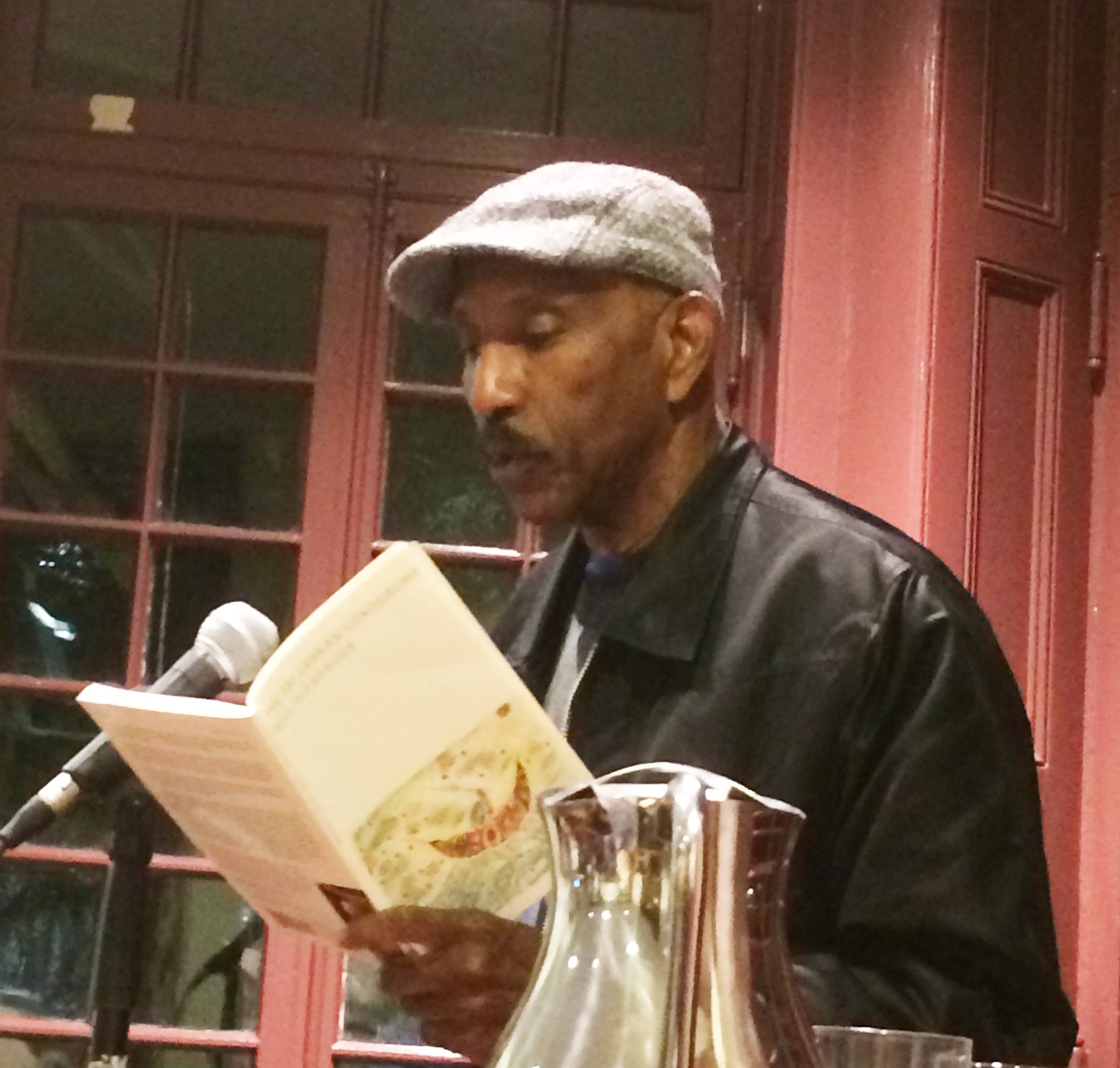
[from Will Alexander’s Poetics: Readings Across the Radiant Glossaries, ed Joshua Schuster (Palgrave Macmillan, 2025)]
Will Alexander’s poetry is asynchronic and echoic. Entering the hyperspace of his work means leaving the temporal horizon of my daily life, contained by appointments and schedules, news, birthdays, attachments and affections, annoyances and aggrievements –– the mandatory background of the broad mass of post-confessional lyric poetry. Time and space are distended and expanded, warped and whooped: it’s as immediate and palpable as going to the planetarium and looking up (but without the tethering narrative of an educational voice over).
There are many ways Alexander’s poetics might be characterized –– visionary, cosmic, science/speculative fiction, trippy, ecstatic, gnostic, mystic, magical, surreal, ontological fancy. All these rubrics are apt.
Alexander is not just thinking outside the lyric box: there is no box.
In Alexander’s ragtime band, time and space are not limited by the straitjacket of post-confessional verse. In contrast, what desperately aspires to be normal is weirdly constrained and preternaturally robotic –– subnormal.
Even so, the problem with my rubrics for Alexander’s approach is that they undermine his poetics with well-meaning stabs at redemption, perhaps prompted by a valiant desire to defend work that defies the dictates of official verse culture. Such defensive/redemptive readings may intimate that his poetry offers deeper truths or other truths or abiding truths –– a surreality; or, then again, that his work is valuable for something like its religious, spiritual, social, or transcendental moral purpose. Such redemptive defenses are like the final reel in a post-code Hollywood movie, where the deviance delighted in over the previous reels is given its comeuppance – until you realize that it is that last reel that is the miscreant, not the officially stigmatized behavior.
Alexander is a poet of wild syncretism. He journeys to the far reaches of the twilight zone of language. Even so, I find in his work nothing out of the ordinary; indeed, Alexander’s poetry is entirely inside: Deep space not outer space. The truth and nothing but the truth, so help me God. But whose God? No one’s –– or all ours, if we take the echoic record as ours for the asking, the way the night sky’s ours while we address it.
We never see the same sky twice but the memory of each seeing stays, lays over.
Palimpestuous.
––That’s no montage, that the universe.
Where to place Will Alexander? His work evokes multiple lineages. I am open to them all because Alexander’s poetics so fruitfully expands the field of radical poetic invention. One horizon is the Syncretic Americas –– Aimé Caesar, César Vallejo, Haroldo de Campos, Bob Kaufman, Kamu Brathwaite. But I also think –– late Artaud (like Vallejo and Caesar, translated by Clayton Eshleman), Lautréamont, and Benjmin’s “Doctrine of the Similar.”
But let me shrink back, for a moment, to synchronous time. I first read Will in 1995, when Douglas Messerli’s Sun & Moon Press published Asia and Haiti. Will, Douglas, and I were then in our mid-forties. Alexander began publishing well after Bruce Andrews and I stopped editing L=A=N=G=U=A=G=E in 1982. Even so, I’d put him in conversation with Christopher Dewdeny’s 1978 Spring Trances in the Controlled Emerald Night, Clark Coolidge in his sprung prose and geological excursions from the same time, and Allen Fisher’s quantum mix of variegated vocabularies. Revisionist that I am, I see Will as essential to what our newsletter proposed. I’d say the same for Leslie Scalapino and Nathaniel Mackey, two other immediate contemporaries of ours whose works I first encountered in the mid-80s.
If ever there were a sui-generis or iconoclastic American artist, that’d be Will Alexander. Which puts him in the company of many of the poets, artists, and musicians I most care about. In my poetic polyverse, Alexander is quintessential. The true outliers (topsy-turvy) are the ones think American poetry is a locker room for which only they have the key. Normalcy is their delusion. These are the ones locked in what Charles Olson and Robin Blaser called “The Western Box.”
Will Alexander poetry is pataquerically sublime.
Will Alexander on PennSound
&, of note: on Close Listening with Charles Bernstein, October 19, 2016
Complete recording (28:33): MP3
photo: Charles Bernstein, 2016, at Kelly Writers House
I agree! I love Will Alexander’s work.